As the building industry works toward a net zero future, an important question remains: Can construction materials themselves ever truly be net zero?
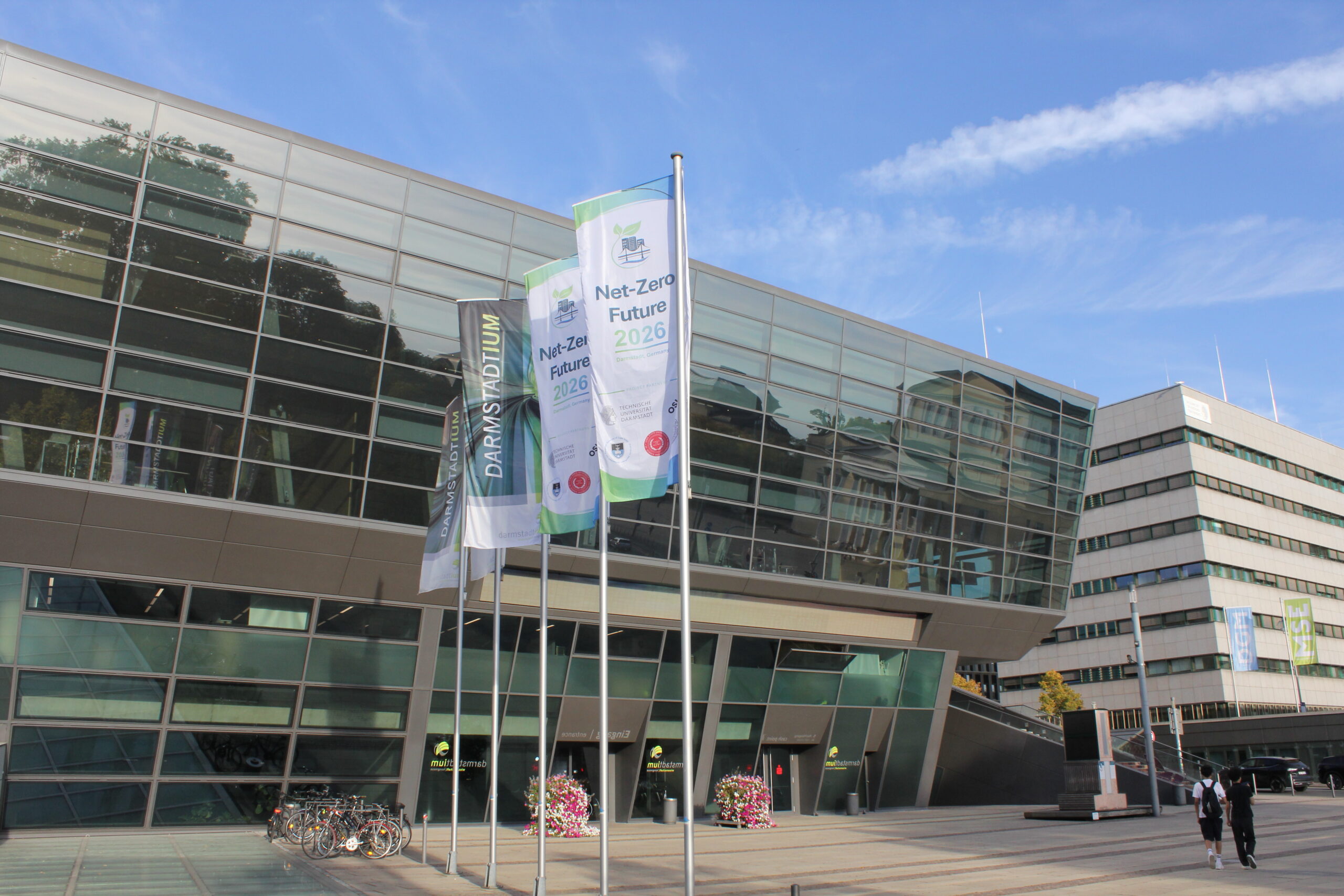
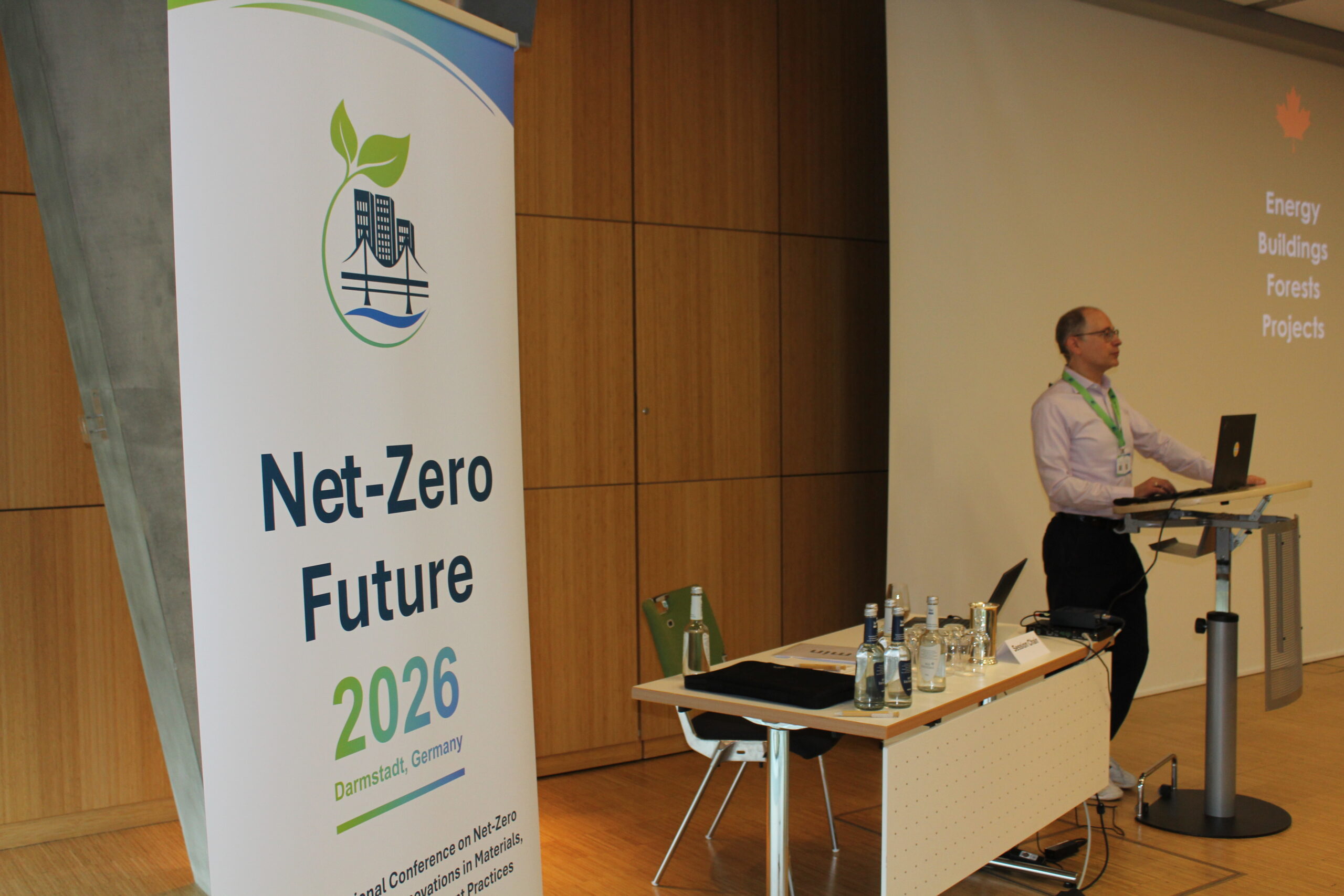
This was among the questions explored by David Moses, Founder and Principal of Moses Structural Engineers (MSE), during his keynote presentation at the Net Zero Futures Conference 2026, held September 30–October 2 in Darmstadt, Germany.
Bringing a Canadian perspective to an international audience of researchers, engineers and industry leaders, David highlighted MSE’s experience designing energy-efficient, low-carbon buildings and explored how material selection will shape the next generation of sustainable construction.
Beyond Energy Efficiency: The Importance of Embodied Carbon
As building codes and green building standards continue to demand greater operational energy efficiency, attention is increasingly turning toward another major source of environmental impact: the embodied carbon of construction materials.
Embodied carbon includes greenhouse gas emissions associated with the extraction, transportation, manufacturing and construction processes involved in producing and using building materials.
While reducing the energy required to heat, cool and operate buildings remains essential, the materials selected during design can determine a significant portion of a building’s lifetime carbon footprint before construction is even complete.
For building owners, developers and designers, these early decisions carry long-term consequences.
During his keynote, David explored how material choices can help reduce embodied carbon, from bio-based materials such as timber and bamboo to emerging advances in lower-carbon concrete.
Each material presents different opportunities and challenges, reinforcing the importance of evaluating construction systems within the context of the entire building.
Learning from Global Research and Innovation
Throughout the conference, researchers and industry professionals shared developments in materials science, structural design and construction technologies aimed at reducing the environmental impact of buildings.
A recurring theme was the importance of life cycle assessment (LCA), which evaluates environmental impacts across the different stages of a building’s life, from material production and construction to operation, maintenance and eventual reuse or end of life.
These approaches can help project teams better understand the environmental consequences of design decisions and identify opportunities to reduce emissions.
The conference also highlighted ongoing research into lower-carbon construction materials, including changes to manufacturing processes, carbon capture technologies, alternative material compositions and emerging construction techniques.
In her keynote presentation, Professor Nele De Belie of Ghent University, President of RILEM, examined the range of strategies currently available to reduce carbon impacts and the important role of continued materials research.
Rethinking How Long Buildings Last
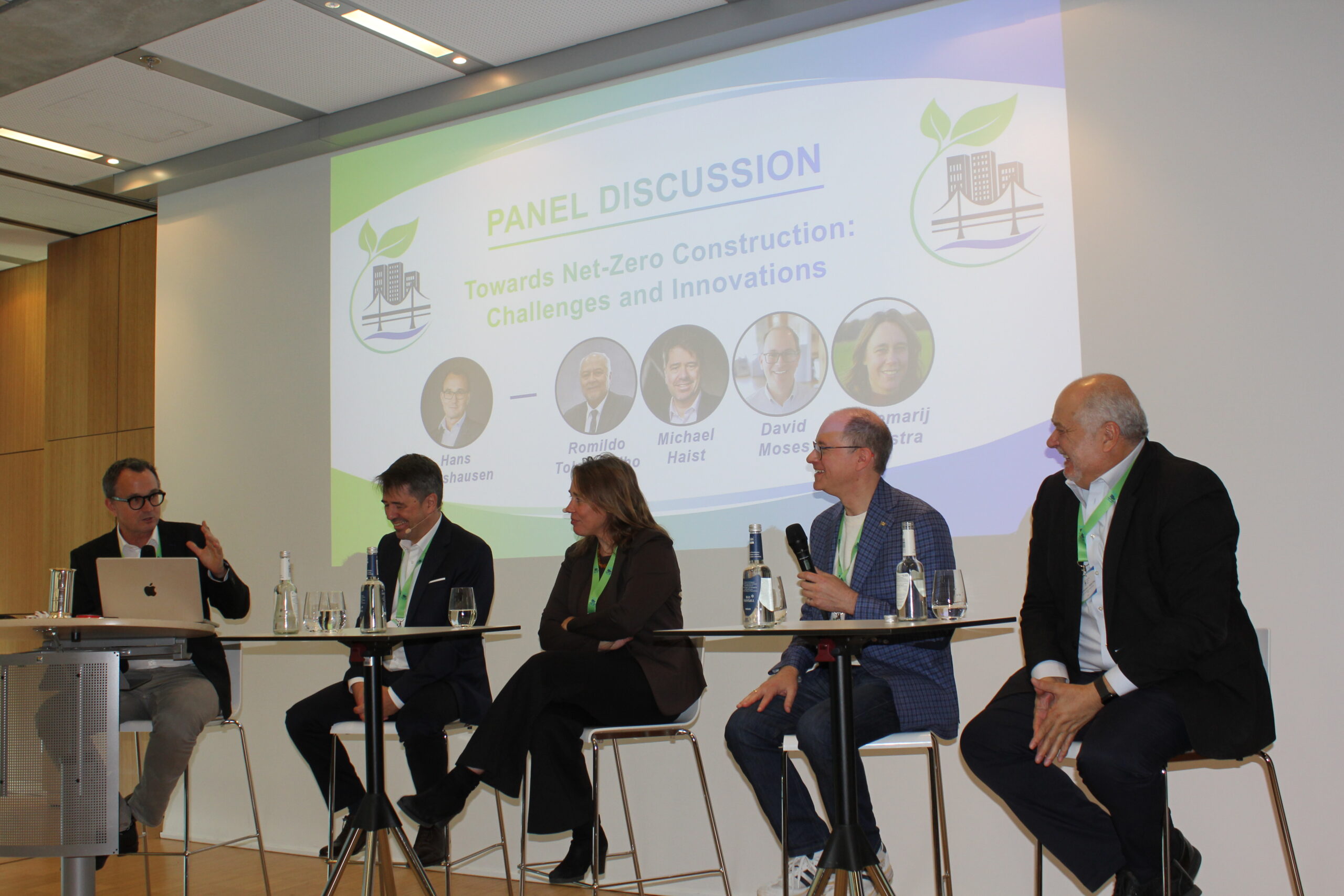
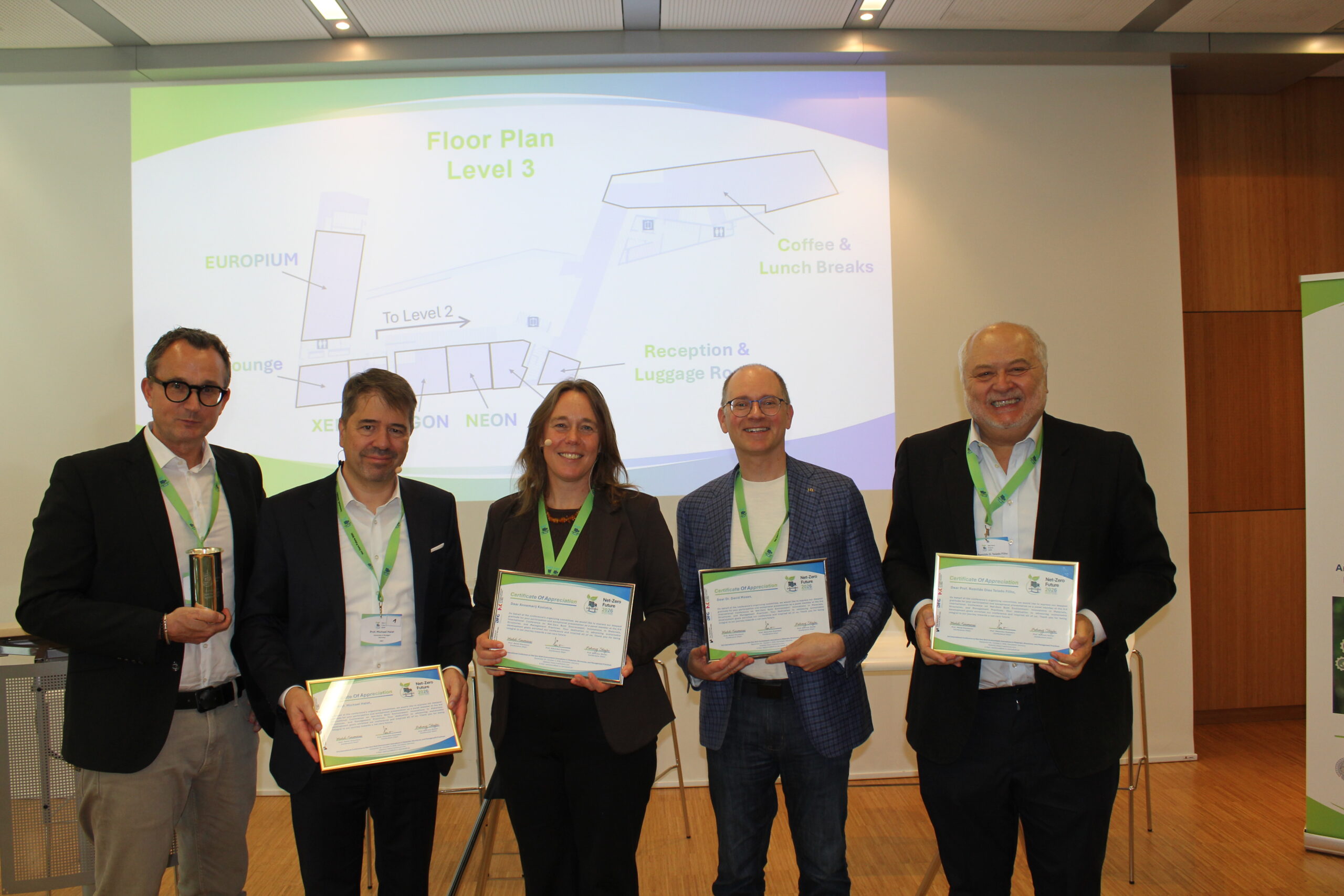
David also participated in a panel discussion moderated by Hans Beushausen, alongside Annemarij Kooistra, Michael Haist and Romildo Dias Toledo Filho.
The discussion explored challenges and opportunities facing net zero construction, including material performance, carbon measurement, government policies and the retention and reuse of existing buildings and infrastructure.
One important consideration was the relationship between embodied carbon and building longevity.
Extending the useful life of existing structures can reduce the need for new materials and avoid emissions associated with demolition and reconstruction. Similarly, designing new buildings for durability, adaptability and long service lives can help distribute their initial carbon impacts over many decades.
Achieving a net zero future therefore requires more than developing new materials. It also requires reconsidering how buildings are designed, maintained, adapted and reused.
What This Means for Canada’s Building Industry
For Canadian developers and building professionals, the transition toward lower-carbon construction is taking place alongside significant economic, regulatory and housing delivery challenges.
Despite these pressures, evolving building codes, environmental standards and international research continue to create opportunities for meaningful progress.
At MSE, our work with mass timber, innovative structural systems and energy-efficient buildings reflects our commitment to finding practical ways to reduce environmental impacts while meeting the needs of real projects.
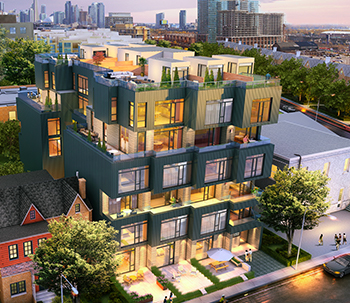
Projects such as the BMO Fischer-Hallman Branch in Kitchener, which combines Passive House design principles with mass timber construction, demonstrate how material selection and building performance can work together to support sustainability goals. Meanwhile, projects like Hälsa in Toronto demonstrate the potential of innovative mass timber systems in multi-storey housing.
The lessons shared at the Net Zero Futures Conference reinforce the importance of early collaboration, informed material selection and considering the full life cycle of a building.
Reshaping how buildings get built means looking beyond how buildings operate to consider what they are made of, how long they last and what happens to them in the future.
MSE thanks conference organizers Eddie Koenders, Mahdi Kioumarsi and Behrouz Shafei for inviting David to participate and for bringing together international perspectives on the future of net zero construction.