



Prefab isn’t one thing
“Prefab” gets tossed around like it’s a single solution. In reality, it’s a process: building or manufacturing parts of a building before they get to site. The result can look very different depending on what’s made offsite. That can mean fully finished 3D modules, flat wall/floor/roof panels, or standardized kits of repeatable parts assembled in different configurations. A useful starting point is to separate prefab into three methods: volumetric modular, panelized, and kit-of-parts.
Volumetric modular: full 3D units
Volumetric modular is what many people picture first: a fully prefabricated 3D “room” or module built in a factory and shipped to site. Units can arrive with structure, mechanical/electrical, and even finishes already installed. On site, the concept is simple: modules are craned into place and stacked, essentially assembling a building from large building blocks.
Volumetric modular tends to win where repetition is high. Multi-unit residential is a common use case, and hotels are often an even stronger fit for 3D volumetric because the unit layouts and servicing are highly repeatable. Clients are typically drawn to two main benefits: consistent quality control from factory conditions, and speed of installation on site when manufacturing and delivery are well-timed.
Despite its benefits, some constraints must be considered. Volumetric is usually coordination-heavy upfront. Designs often need to be more rigid to suit manufacturing and transportation constraints, and key decisions need to be resolved earlier than design teams are used to in conventional on-site construction. Mechanical, electrical, and plumbing routing, penetrations, interfaces, and connection design should be locked down early because the room to “adjust later” shrinks once modules arrive on site.
Site tolerances also matter. Even if modules are built precisely, the foundations or framework they’re being placed onto must be equally precise and properly coordinated to meet the modules. Because foundations or support conditions may not land exactly where expected, tolerance and adjustability should be designed into the interfaces between volumetric modules and their supports.
Financing and procurement can also be different with volumetric. Factory production may require larger deposits or prepayments than a typical site-built project, which can affect cash flow and contracting strategy if it’s not planned for early.
It’s also worth noting that “factory-built” doesn’t always mean “highly automated.” Some volumetric delivery models are essentially the same work moved indoors for better control and repeatability, while others leverage more advanced manufacturing processes. Both fall under the volumetric umbrella, but they can differ significantly in schedule certainty, quality outcomes, and how the project should be planned.
Panelized: flat components with more design flexibility
Panelized prefab refers to flat panels (walls, floors, and roofs) manufactured offsite and shipped on flatbeds. Anything that can be fabricated as a panel and transported efficiently fits this approach.
Panelized often wins when the project needs more customization than volumetric modular can comfortably support. Panelized prefabrication is also efficient for shipping since panels can be stacked compared to transporting one or two large volumetric units per truck.
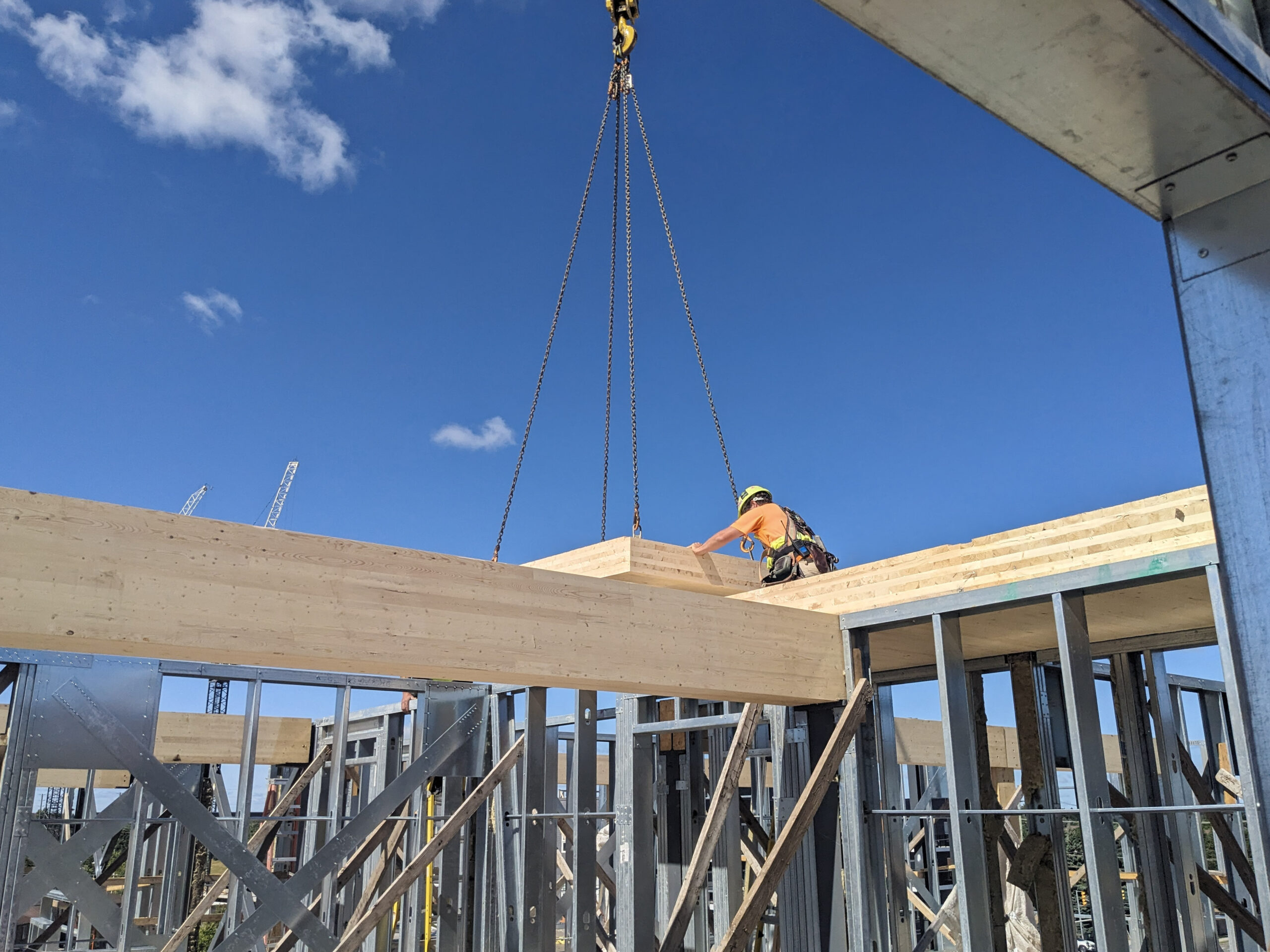
The reality is that panels are installed one at a time. Sequencing and site labour remain and panelized still requires fit-up and coordination on site. If panels aren’t properly coordinated with other systems, the project can lose time to on-site retrofits. A common example is panelized scope clashing with existing installed structure such as structural steel framing or concrete. If the panel package isn’t coordinated with beams, columns, and connection details, panels may need augmentation or retrofits on site to fit around site-installed steel or concrete. That is exactly the kind of on-site issue prefab is meant to reduce.
Panelized success often starts with structural decisions that sound simple but have outsized impact. Keeping walls continuous where possible helps since openings are where panels must be cut, changed, or heavily customized. It also helps to design so panels drive the assembly, rather than becoming custom pieces fitted around complex structure, because that’s where coordination and on-site augmentation increase. Interfaces matter too: mixed materials and complex transitions add coordination and can erode prefab’s benefits.
Kit-of-parts prefab: standardized components, flexible layouts
Kit-of-parts prefab is less about shipping a specific room or panel layout and more about standardizing the building blocks: pre-engineered components such as panels, frames, and connectors that can be assembled in different configurations. The idea is customization through recombination, with many outcomes built from the same repeatable parts and connections.
Kit-of-parts is gaining traction because it aims to combine flexibility with repeatability. Standard parts and repeatable connections can make assembly more predictable and reduce reliance on highly specialized modular crews, while still allowing adaptability during construction. In practice, it can feel like a more systematized way to build without locking every decision into a finished 3D module.
The complexity of this method moves upstream. Kit-of-parts tends to rely heavily on structural system design. Engineering a kit so the same components can perform across different spans, loads, and layouts is a significant design challenge. It can be more demanding on the engineering side even if it simplifies assembly and installation downstream.
Coordination is the make-or-break risk
Across all prefab approaches, the most consistent risk is coordination between trades. This is especially true for hybrid projects that mix prefabricated elements with other structural systems, or combine multiple prefab scopes. When coordination slips, clashes show up on site as installed conflicts that need fixing, and that’s where schedule and budget advantages can start to erode. The solution is straightforward: bring the right trades together early, coordinate thoroughly up front, and make sure the team has real prefab experience.
A helpful way to think about how coordination pressure changes across prefab approaches is as a coordination ladder, where systems at the top of the ladder require the most coordination before site work begins:
- Volumetric modular typically demands the most upfront coordination. All systems need to align early because modules arrive highly complete.
- Panelized prefab requires heavy coordination, but generally allows more on-site tolerance and flexibility during assembly than volumetric.
- Kit-of-parts uses standardized components and repeatable connections which require increased engineering effort during the design process, but can allow more adaptability during construction.
Pick the strategy that matches your project — and commit early
Prefab can absolutely deliver value, but only when everyone is clear about which prefab approach is being used and what that choice demands. Volumetric modular can offer speed and consistency, especially with repetition, but requires strong early coordination and a disciplined design approach. Panelized prefab can support more customization and efficient shipping, but depends heavily on fit-up and coordination with other systems. Kit-of-parts prefab offers flexibility through standardized components, while shifting complexity towards the initial engineering of the system.
The most important early decision is simply prefab or site-built. If prefab is the path, success depends on engaging a team (consultants, designers, contractors, and trades) who know how to coordinate prefab well, and doing the coordination work early so the build phase stays smooth.